
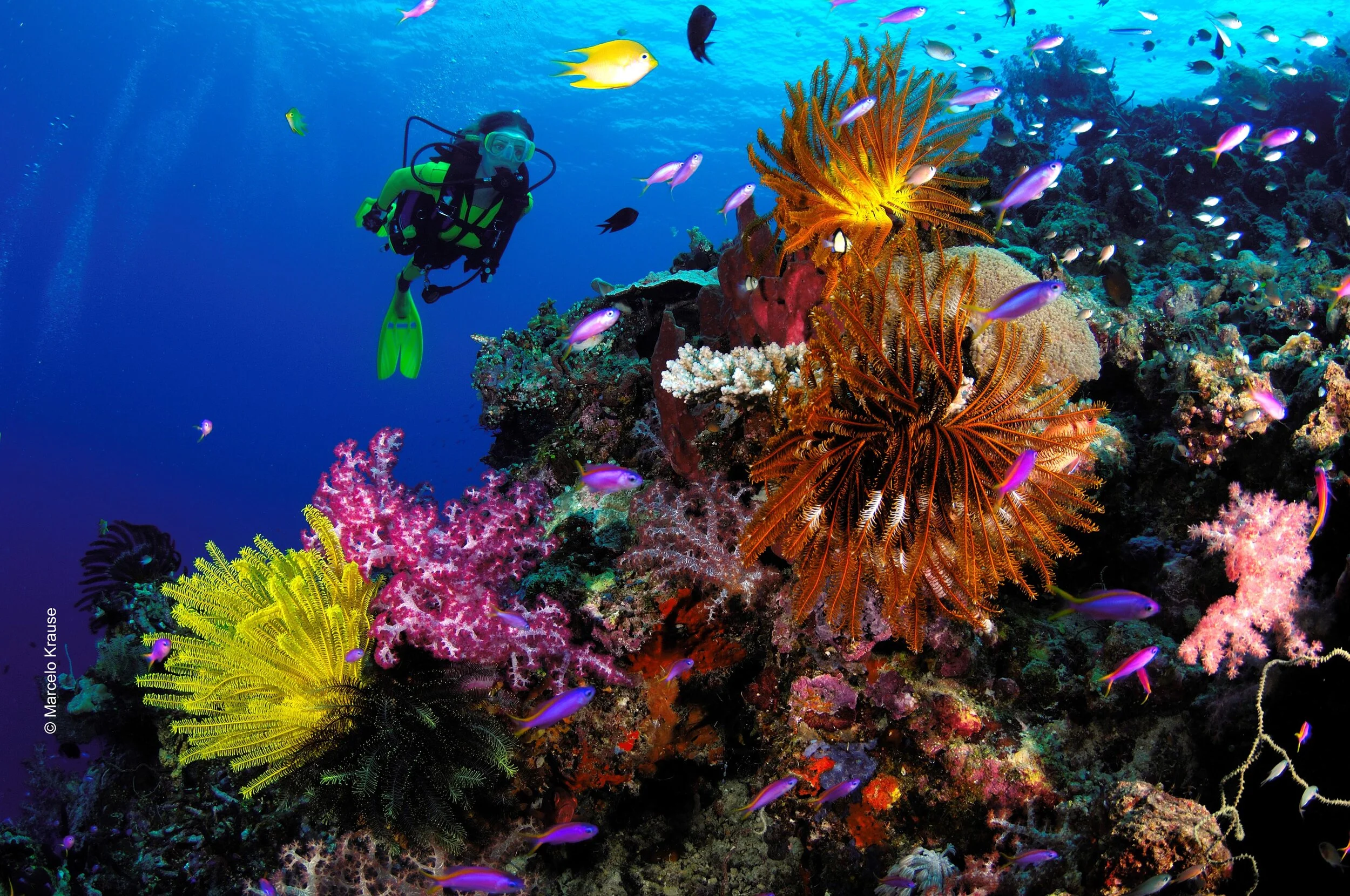
Dive into the pristine waters of Papua New Guinea
Whilst on board FeBrina, guests will be diving on some of the most beautiful reefs and sea mounts in the Bismarck sea, with abundant fish life amongst picturesque and dramatic volcanically formed reefscapes. Papua New Guinea is located in the coral triangle, the centre of marine biodiversity which has the highest diversity of tropical fish and coral in the world.
Colourful corals are home to a variety of fish, crustacean and invertebrate life and many of the reefs have resident schools of barracuda, tuna and jacks. A range of shark species are regularly sighted, including hammerheads and silvertips, particularly on the offshore reefs. A resident pod of dolphins frequently entertains divers.
The occasional sightings of orca, pilot whales, whale sharks and other marine life passing through Kimbe Bay and West New Britain waters always delight both guests and staff.
MV FeBrina offers a variety of itineraries throughout the year, each tailored to suit changing weather patterns and designed to dive the best of what is on offer. Please don’t hesitate to get in touch with our friendly reservations team who will be able to assist with find an itinerary to suit you.
A taste of some of the areas we dive:
(For detailed information on each area, click the buttons below)
KIMBE BAY
Kimbe Bay is home to stunning reefs with those brilliant coral formations you see in all the classic Walindi pictures. Beautiful and dramatic sea mounts, coral laden walls and lush coral gardens are all a feature of Kimbe Bay diving, along with myriad fish and invertebrate life the reefs sustain.
WITU ISLANDS
Witu Islands are situated to the North West of Kimbe Bay and this area is visited by MV Oceania at selected times during the year. A cross section of diving includes sea mounts and black sand bays around the islands, so this area provides a perfect mix of both pelagic activity and critters.
FATHERS REEFS
Fathers are series of off shore reefs, volcanic in origin. The underwater topography is startlingly different with dramatic reefscapes, arches and swim throughs. Being offshore, these reefs also attract pelagic activity such as sharks, rays, turtles, schools of barracuda, jacks etc.
RABAUL
Rabaul is known topside for WWII history – but what really makes Rabaul shine is the areas jetty dives. Macro lovers will delight at the sandy bottom dives featuring a myriad of different species of frogfish, harlequin ghost pipefish, bumblebee shrimp, harlequin shrimp, mandarin fish, coconut octopus, boxer crabs, leaf scorpion fish and nudibranchs - just to name a few.
KAVIENG/NEW HANOVER
Featuring a diverse variety of marine life, diving around Kavieng and New Hanover includes coral gardens, bommies and wall dives in the passages. The channels are fantastic for drift diving with large schools of fish, graceful rays and shark patrolling the lush coral laden sides of the passages. Reefs in this area are not dived often and offer a good mix of stunning reef dives for the wide angle photographer as well as lots of little critters, perfect for the macro enthusiast.
A MESSAGE FROM SKIPPER ALAN RAABE ABOUT MV FEBRINA’S ITINERARIES & WEATHER PATTERNS
Life on the Water: How the Year Unfolds Aboard Febrina
Our FeBrina diving year usually starts in March. I kick things off with shorter trips heading out to the Witu Islands and Kimbe Bay. It’s a pleasant time to be on the water, with light north-westerly winds making for comfortable cruising and diving conditions.
April through to June is a particularly good stretch. We’re generally treated to light winds and favourable seas, and the ocean really settles down. This is when we start offering longer itineraries again.
By July and August, the south-easterly trade winds arrive. With that shift, I return to shorter itineraries, focusing on places like Father’s Reefs and Lolobau Island. Father’s is always a highlight—an underwater caldera that’s full of fish life. Even though it’s quite a way offshore, we’re well protected by Mount Ulawun—“The Father”—an active volcano rising about a mile high. I’ve always enjoyed our Walindi to Rabaul trips as well. They give us the chance to include Father’s and the Bainings along the way, adding variety and a sense of exploration to the journey.
From September through to December—our optimal months—we can travel further afield. These are the times I like to run itineraries that take in Walindi, the Witus, New Hanover, Dyaul Island, and on into Kavieng, diving some excellent channels along the way.
I always make room for a couple of exploratory trips each year. There’s still plenty out there to explore, and our guests get pretty excited about discovering new locations up here.
Most days, we fit in four day dives plus a night dive, with the first dive at 6:30am. We also do daily laundry on board, so you don’t need to bring much for your dive trip.
We serve wine with dinner but don’t carry spirits, so you’re welcome to bring your own duty-free alcohol.
Our trips on FeBrina are popular with dive clubs and groups, and we’re always happy to discuss charters or adjust itineraries where we can. I also really recommend taking a look at our partner liveaboard MV Oceania’s trips between Rabaul to Milne Bay (Alotau) in February and March, especially for those who enjoy macro photography.